• This is slide 1 description. Go to Edit HTML of your blogger blog. Find these sentences. You can replace these sentences with your own words.
  • This is slide 2 description. Go to Edit HTML of your blogger blog. Find these sentences. You can replace these sentences with your own words.
  • This is slide 3 description. Go to Edit HTML of your blogger blog. Find these sentences. You can replace these sentences with your own words.
  • This is slide 4 description. Go to Edit HTML of your blogger blog. Find these sentences. You can replace these sentences with your own words.
  • This is slide 5 description. Go to Edit HTML of your blogger blog. Find these sentences. You can replace these sentences with your own words.

Friday, 26 July 2019

Ralph Neville

Ralph Neville.
Ralph Neville (died 1244) was a medieval clergyman and politician who served as Bishop of Chichester and Lord Chancellor of England. Neville first appears in the historical record in 1207 in the service of King John, and remained in royal service for the rest of his life. By 1213 Neville had custody of the Great Seal of England, although he was not named chancellor, the office responsible for the seal, until 1226. He was rewarded with the bishopric of Chichester in 1222. He was briefly Archbishop-elect of Canterbury and Bishop-elect of Winchester, but both elections were set aside, or quashed, and he held neither office. As keeper of the seal, and later as chancellor, Neville was noted for his impartiality and for overseeing changes in the way the chancery operated. Neville was deprived of the Great Seal in 1238 after quarrelling with the king, but continued to hold the title of chancellor until his death.

Thursday, 25 July 2019

Orpheus in the Underworld

Orpheus in the Underworld.
Orpheus in the Underworld (Orphée aux enfers, 1858) is a comic opera with music by Jacques Offenbach (pictured) and words by Hector Crémieux and Ludovic Halévy. It was extensively revised and expanded in 1874 for a run that broke box-office records at the Théâtre de la Gaîté, Paris. In the opera, a lampoon of the legend of Orpheus and Eurydice, Orpheus is a rustic violin teacher who is glad to be rid of his wife when she is abducted by the god of the underworld. The reprehensible conduct of the gods of Olympus was widely seen as a veiled satire of the court and government of Napoleon III, Emperor of the French. Some critics expressed outrage at the librettists' disrespect for classic mythology and the composer's parody of Gluck's opera Orfeo ed Euridice; others praised the piece highly. It was Offenbach's first full-length opera and remains the one that is most often performed. Can-can cabaret acts still use its "Galop infernal", adopted later in the 19th century by the Moulin Rouge and Folies Bergère.

Wednesday, 24 July 2019

History of the Office of the Inspector General of the United States Army

History of the Office of the Inspector General of the United States Army.
The Office of the Inspector General of the United States Army is the agency tasked with investigating the army. Its stated mission includes "advice and oversight to the army through ... inspection, assistance, investigations, and training". George Washington and members of the Continental Congress requested an inspector general for the Continental Army in 1777, and Thomas Conway was appointed the same year. His successor was Friedrich Wilhelm von Steuben, a Prussian military officer who later served as Washington's chief of staff. The office has been reorganized many times, and has varied in size dramatically. In its early days, the inspectorate was frequently merged with, or proposed to be part of, the Adjutant General's department. It expanded greatly after the Civil War, and had grown to around 2,000 officers by 1993. Leslie C. Smith (pictured) has been the inspector general since February 2018.

Tuesday, 23 July 2019

Coinage Act of 1965

Coinage Act of 1965.
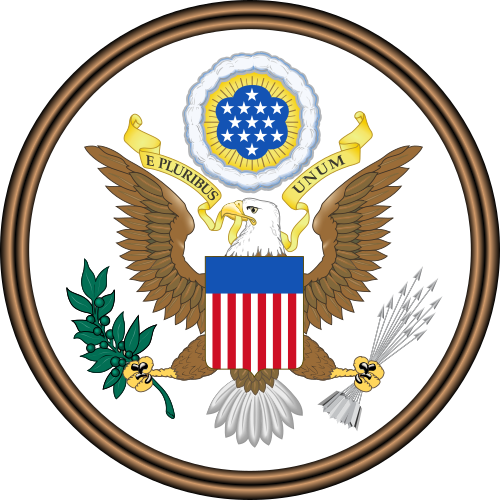
The Coinage Act of 1965 eliminated silver from the United States dime (ten-cent piece) and quarter dollar, and also reduced the silver content of the half dollar from 90 percent to 40 percent. There had been coin shortages beginning in 1959, and the United States Bureau of the Mint expanded production to try to meet demand. Increased industrial demand for silver drove its price higher; there was widespread hoarding of silver coins. With government stocks of the metal being depleted, President Lyndon B. Johnson recommended that Congress allow silverless dimes and quarters, and debased silver half dollars. Congress passed the bill rapidly and Johnson signed it on July 23, 1965. The new coins began to enter circulation in late 1965, and alleviated the shortages. Precious metal coins vanished from circulation beginning in 1967 as the price of silver rose. The act also banned the production of silver dollars until at least 1970.

Monday, 22 July 2019

William Harper (Rhodesian politician)

William Harper (Rhodesian politician).
William Harper (22 July 1916 – 8 September 2006) was a politician, general contractor and Royal Air Force fighter pilot who served as a Cabinet minister in Rhodesia (or Southern Rhodesia) from 1962 to 1968. He signed Rhodesia's Unilateral Declaration of Independence from Britain in 1965. Born into an Anglo-Indian merchant family in Calcutta, he joined the RAF in 1937. He served as an officer throughout the Second World War and was wounded in the Battle of Britain. He emigrated to Rhodesia on retiring from the air force. Entering politics with the Dominion Party in 1958, he became Minister of Irrigation, Roads and Road Traffic in the Rhodesian Front government in 1962. When the Prime Minister Winston Field resigned in 1964, Harper was a front-runner to succeed him, but lost out to Ian Smith. After leading opposition in the Cabinet to some of Smith's negotiations, he was dismissed. He left for South Africa before majority rule began in Zimbabwe Rhodesia in 1979.

Sunday, 21 July 2019

Neil Armstrong

Neil Armstrong.
Neil Armstrong (1930–2012) was an astronaut and aeronautical engineer who was the first person to walk on the Moon. He was a United States Naval Aviator who served in the Korean War and later worked as a civilian test pilot for experimental aircraft. Armstrong joined the NASA Astronaut Corps in the second group, selected in 1962; he made his first spaceflight as command pilot of Gemini 8 in March 1966, becoming NASA's first civilian astronaut to fly in space. During this mission with pilot David Scott, he completed the first docking of two spacecraft. In July 1969, Armstrong and Apollo 11 Lunar Module pilot Buzz Aldrin performed the first crewed Moon landing, while Michael Collins remained in lunar orbit in the command module. Stepping onto the lunar surface, Armstrong said: "That's one small step for [a] man, one giant leap for mankind." He was later awarded the Presidential Medal of Freedom, the Congressional Space Medal of Honor and the Congressional Gold Medal.

Saturday, 20 July 2019

Siege of Berwick (1333)

Siege of Berwick (1333).
The Siege of Berwick lasted four months in 1333, and resulted in the Scottish-held town of Berwick-upon-Tweed being captured by an English army commanded by King Edward III (r. 1327–1377). The year before, Edward Balliol had seized the Scottish Crown, surreptitiously supported by Edward III. After Balliol was expelled from the kingdom by a popular uprising, Edward III invaded Scotland. An advance force laid siege to the strategically important border town of Berwick in March; Edward III and the main English army joined it in May and pressed the attack. A large Scottish army advanced to relieve the town. After unsuccessfully manoeuvring for position and knowing that Berwick was on the verge of surrender, the Scots felt compelled to attack the English at Halidon Hill. They suffered a crushing defeat and Berwick surrendered the next day, 20 July. Balliol was reinstalled as King of Scotland after ceding a large part of his territory to Edward III and agreeing to do homage for the balance.