• This is slide 1 description. Go to Edit HTML of your blogger blog. Find these sentences. You can replace these sentences with your own words.
  • This is slide 2 description. Go to Edit HTML of your blogger blog. Find these sentences. You can replace these sentences with your own words.
  • This is slide 3 description. Go to Edit HTML of your blogger blog. Find these sentences. You can replace these sentences with your own words.
  • This is slide 4 description. Go to Edit HTML of your blogger blog. Find these sentences. You can replace these sentences with your own words.
  • This is slide 5 description. Go to Edit HTML of your blogger blog. Find these sentences. You can replace these sentences with your own words.

Wednesday, 12 February 2020

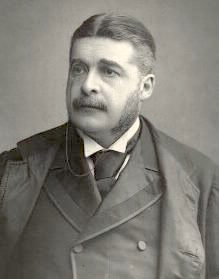
Arthur Sullivan

Arthur Sullivan.
Arthur Sullivan (13 May 1842 – 22 November 1900) was an English composer best known for his operatic collaborations with the dramatist W. S. Gilbert. Among his early works were a ballet, a symphony, a cello concerto and a one-act comic opera, Cox and Box, which is still widely performed. He wrote his first opera with Gilbert, Thespis, in 1871. In 1875 the impresario Richard D'Oyly Carte engaged Gilbert and Sullivan to create a one-act piece, Trial by Jury. Its box-office success led the partners to collaborate on 12 more full-length comic operas, including H.M.S. Pinafore, The Pirates of Penzance and The Mikado. Sullivan's only grand opera, Ivanhoe, though initially successful in 1891, has rarely been revived. His works include 24 operas, 11 major orchestral works, 10 choral works and oratorios, 2 ballets, incidental music to several plays, and numerous church pieces, songs, and piano and chamber pieces. His hymns and songs include "Onward, Christian Soldiers" and "The Lost Chord".

Tuesday, 11 February 2020

Yeomanry Cavalry

Yeomanry Cavalry.
The Yeomanry Cavalry was the mounted component of the British Volunteer Corps, a military auxiliary established in the late 18th century. When the Volunteer Corps was disbanded after the defeat of Napoleon in 1815, the yeomanry – recruited from the middle and upper classes – was retained as a politically reliable institution that could act as a mounted police force. It became infamous after playing a leading part in the Peterloo Massacre of 1819, and its policing role declined as civilian police forces were established in the mid-19th century. The yeomanry struggled to find a place in the military establishment, and it survived largely because of its members' political influence and willingness to subsidise it financially. It found a new relevance when the Second Boer War revealed a need for mounted infantry. It was reorganised in 1901 as the Imperial Yeomanry, and in 1908 it ceased to be a discrete institution when all volunteer auxiliaries were amalgamated into the Territorial Force.

Monday, 10 February 2020

Abby (TV series)

Abby (TV series).
Abby is an American sitcom created by Nat Bernstein and Michael Katlin that aired for one season on UPN from January 6, 2003, to March 4, 2003. The show features Sydney Tamiia Poitier (pictured) as television producer Abby Walker and Kadeem Hardison as her ex-boyfriend Will Jeffries. After they break up in the pilot episode, they agree to live together as friends in their rent-controlled San Francisco apartment. Bernstein and Katlin had intended to feature an interracial couple, casting Sean O'Bryan as Will. After a negative response from test audiences, they gave the role to Hardison and recast O'Bryan as a supporting character, along with Randy J. Goodwin and Tangie Ambrose. Despite UPN's heavy promotion, the show attracted a weekly average of just 1.7 million viewers, making it the lowest-performing show tracked by Nielsen Holdings at the time. Critical responses were primarily negative; commentators praised Poitier's acting but criticized the show's reliance on sexual humor.

Sunday, 9 February 2020

Adele Spitzeder

Adele Spitzeder.
Adele Spitzeder (9 February 1832 – 27 or 28 October 1895) was a German actress, folk singer, and confidence trickster. Initially a promising young actress, Spitzeder became a private banker in Munich when her theatrical success dwindled. Running what was possibly the first recorded Ponzi scheme, she offered large returns on investments by continually using the money of new investors to pay back the previous ones. At the height of her success, contemporary sources considered her the wealthiest woman in Bavaria, although she maintained the persona of a pious Christian woman who helped the poor. Brought to trial in 1872, she was convicted of bad accounting and mishandling customers' money, since Ponzi schemes were not yet illegal, and sentenced to three years in prison. In her later years, Spitzeder performed as a folk singer, living off friends and benefactors, but never completely left her criminal life, resulting in further trials and periods of incarceration.