• This is slide 1 description. Go to Edit HTML of your blogger blog. Find these sentences. You can replace these sentences with your own words.
  • This is slide 2 description. Go to Edit HTML of your blogger blog. Find these sentences. You can replace these sentences with your own words.
  • This is slide 3 description. Go to Edit HTML of your blogger blog. Find these sentences. You can replace these sentences with your own words.
  • This is slide 4 description. Go to Edit HTML of your blogger blog. Find these sentences. You can replace these sentences with your own words.
  • This is slide 5 description. Go to Edit HTML of your blogger blog. Find these sentences. You can replace these sentences with your own words.

Tuesday, 17 March 2020

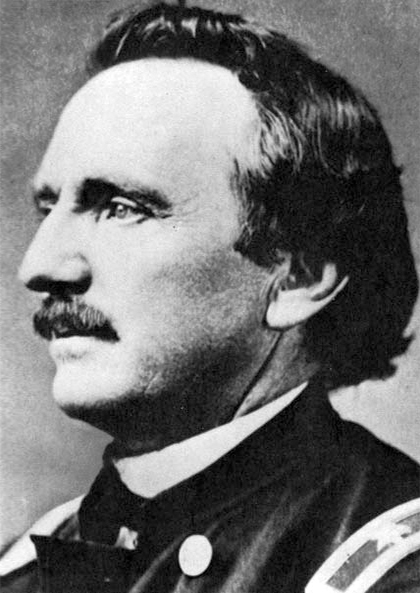
William F. Raynolds

William F. Raynolds.
William F. Raynolds (March 17, 1820 – October 18, 1894) was an explorer, engineer and army officer who served in the Mexican–American War and the American Civil War. He oversaw the construction of numerous lighthouses; at least six of them are still standing and in use. During the occupation of Mexico in 1848, Raynolds led a party that was the first to summit Pico de Orizaba, the highest mountain in Mexico and believed at that time to be the highest in North America. In 1859, Raynolds was placed in charge of the first government-sponsored expedition into the Yellowstone region. Heavy snowpack prevented the expedition from reaching the Yellowstone Plateau, forcing them to cross Union Pass in the Wind River Range. The expedition then entered Jackson Hole and surveyed the Teton Range, now within Grand Teton National Park. Raynolds retired from the army in 1884 with the rank of colonel after a 40-year career.

Monday, 16 March 2020

Bridgeport, Connecticut, Centennial half dollar

Bridgeport, Connecticut, Centennial half dollar.
The Bridgeport, Connecticut, Centennial half dollar is a fifty-cent piece issued by the United States Bureau of the Mint in 1936 as a commemorative coin. Designed by Henry Kreis, the obverse (pictured) depicts the showman P. T. Barnum, who was one of Bridgeport's most famous residents, mayor of the city, helped develop it, and is buried there. Bridgeport authorities wanted a commemorative coin, and authorizing legislation passed Congress without opposition. Kreis had designed the Connecticut Tercentenary half dollar (1935), and he produced designs showing Barnum and a modernistic eagle similar to the one on the Connecticut piece. The coins were vended to the public beginning in September 1936 at a price of $2. Too late for most of the centennial celebrations, the coins sold well. Unsold pieces were bought up by coin dealers and wholesale quantities were available on the secondary market until the 1970s. The Bridgeport half dollar sells in the low hundreds of dollars, depending on condition.

Sunday, 15 March 2020

Alloxylon pinnatum

Alloxylon pinnatum.
Alloxylon pinnatum, the Dorrigo waratah, is a tree of the family Proteaceae found in warm-temperate rainforest of south-east Queensland and northern New South Wales in eastern Australia. It has shiny green leaves that are either lobed and up to 30 cm (12 in) long, or spear-shaped and up to 15 cm (5.9 in) long. The prominent pinkish-red flower heads with 50 to 140 individual flowers appear in spring and summer. These are followed by rectangular woody seed pods, which bear two rows of winged seeds. Known for many years as Oreocallis pinnata, it was transferred to the new genus Alloxylon by Peter Weston and Mike Crisp in 1991; the genus contains four species previously classified in Oreocallis that are found in Australasia. The tree's terminal tubular flowers indicate that it is pollinated by birds. Classified as "near threatened" under the Queensland Nature Conservation Act 1992, the Dorrigo waratah has proven difficult to keep alive in cultivation.

Saturday, 14 March 2020

Muhammad III of Granada

Muhammad III of Granada.
Muhammad III (1257–1314) was the Nasrid ruler of the Emirate of Granada in Al-Andalus on the Iberian Peninsula from 1302 until 1309. He built upon the military successes of his father Muhammad II against Castile, and expanded Granada's territory by capturing Bedmar in 1303. A treaty with Castile the following year recognised Granada's conquests in return for Muhammad's pledge of fealty and tribute to King Ferdinand IV. In 1306, Muhammad conquered Ceuta in North Africa, putting Granada in control of both sides of the Strait of Gibraltar. He built the Alhambra's Great Mosque (destroyed in the sixteenth century by Philip II), a nearby public bathhouse and the Partal Palace (pictured). Poor sight eventually forced him to rely heavily on his advisors, especially Ibn al-Hakim al-Rundi, his vizier, who became the de facto ruler. Muhammad was deposed in a palace coup when Granada was on the verge of a new war against Castile, Aragon, and the Marinids.