• This is slide 1 description. Go to Edit HTML of your blogger blog. Find these sentences. You can replace these sentences with your own words.
  • This is slide 2 description. Go to Edit HTML of your blogger blog. Find these sentences. You can replace these sentences with your own words.
  • This is slide 3 description. Go to Edit HTML of your blogger blog. Find these sentences. You can replace these sentences with your own words.
  • This is slide 4 description. Go to Edit HTML of your blogger blog. Find these sentences. You can replace these sentences with your own words.
  • This is slide 5 description. Go to Edit HTML of your blogger blog. Find these sentences. You can replace these sentences with your own words.

Thursday, 5 March 2020

J. R. Kealoha

J. R. Kealoha.
J. R. Kealoha (died March 5, 1877) was a Native Hawaiian who fought in the American Civil War at a time when the Kingdom of Hawaii was an independent nation. He enlisted in the 41st United States Colored Infantry (USCT), formed in Pennsylvania. Participating in the Siege of Petersburg, he met the HawaiÊ»i-born Colonel Samuel Armstrong, who recorded their encounter. With the 41st USCT, Kealoha was present at the surrender of the Confederate Army of Northern Virginia on April 9, 1865. He returned to HawaiÊ»i, where he died and was buried in an unmarked grave in Honolulu's OÊ»ahu Cemetery. In 2010, Kealoha and more than 100 other Native Hawaiian and HawaiÊ»i-born "HawaiÊ»i Sons of the Civil War" were commemorated with a bronze plaque erected along the memorial pathway at the National Memorial Cemetery of the Pacific in Honolulu. In 2014, a grave marker (pictured) was dedicated over Kealoha's burial site.
Wednesday, 4 March 2020

A Wizard of Earthsea

A Wizard of Earthsea.
A Wizard of Earthsea is a fantasy novel written by American author Ursula K. Le Guin (pictured). First published by the small press Parnassus in 1968, it is considered a classic of fantasy and of children's literature. Set in the fictional archipelago of Earthsea, the story centers around a gifted mage named Ged. His prickly nature drives him into a duel with an older pupil at a school of wizardry, during which his spell goes awry and releases a shadow creature that attacks him. The novel follows his journey to be free of the creature. Often described as a coming-of-age story, the book explores Ged's process of learning to cope with power and come to terms with death. Taoist themes are reflected in a fundamental balance in the universe of Earthsea, which wizards are supposed to maintain. Margaret Atwood called the novel one of the "wellsprings" of fantasy literature. It was followed by five other volumes sharing a setting; the six works are collectively known as the Earthsea Cycle.

Tuesday, 3 March 2020

Tourette syndrome

Tourette syndrome.
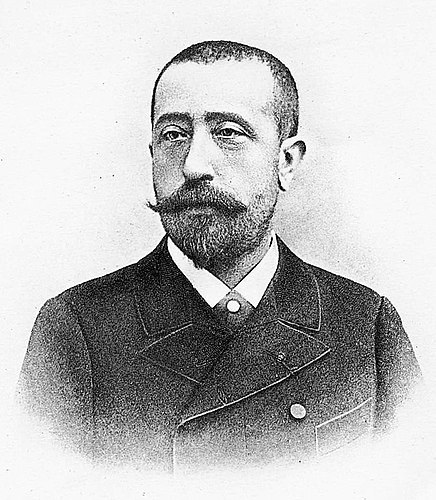
Tourette syndrome is a neurodevelopmental disorder which begins during childhood or adolescence. It is characterized by tics (video shown) such as blinking, coughing, sniffing, or facial movements that are a somewhat suppressible response to an unwanted urge. Once considered rare, Tourette's occurs in about 1% of people under eighteen, although many go undiagnosed or never seek medical care. There is no specific test for diagnosis and Tourette's is not always correctly identified because most cases are mild. Extreme cases in adulthood are rare and Tourette's does not affect intelligence or life expectancy. Education is an integral part of management of the syndrome, and explanation and reassurance are often sufficient. The cause is believed to involve environmental and unknown genetic factors. The condition was named for Georges Gilles de la Tourette, who published an account of nine patients in 1885.

Monday, 2 March 2020

Palmyra

Palmyra.
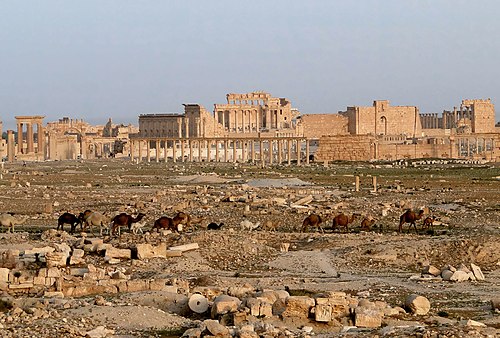
Palmyra is an ancient city in present-day Homs Governorate, Syria. Inhabited since the Neolithic period, it entered recorded history in the early second millennium BC. Palmyra became part of the Roman Empire in the first century AD. Palmyrene merchants established colonies along the Silk Road and the city grew wealthy from trade caravans. Many monumental projects were erected, such as the Great Colonnade, the Temple of Bel, and distinctive tower tombs. Palmyra reached the apex of its power in the 260s, when its king Odaenathus defeated the Persian emperor Shapur I. After Odaenathus's assassination in 267, his widow Zenobia rebelled against Rome and conquered the Roman East. Palmyra was destroyed in 273 by the Roman emperor Aurelian. Restored on a smaller scale, it remained a minor trading center until it was sacked by the Timurids in 1400 and became a small village. During the Syrian civil war in 2015, the Islamic State of Iraq and the Levant destroyed large parts of the ancient city.